- WHO and NHS guidance for adults is at least 150 minutes of moderate activity a week plus strength work on 2 or more days. Use it as your floor.
- Build up over 8 weeks with walking, stairs, strength and a longer weekend hill walk, aiming to be comfortable on your feet for 6 to 8 hours.
- Fitness helps you enjoy the walking, but it does not replace gradual acclimatisation. See a doctor first if you have a health condition.
To get fit for a Himalayan trek, build up to at least 150 minutes of brisk walking or similar activity a week, add stairs and strength work, and finish with a long weekend hill walk carrying your pack. Eight weeks is enough for most beginners preparing for an easy or easy-to-moderate trek.
What are you training for?
Look at the real days on the trail. On Kedarkantha, our trek page lists 23 km of walking over four days, with a summit day of about 3 km up and 6 km down in around 7 hours. Brahmatal's longest day is the 8.5 km descent, 7 to 8 hours. Dayara Bugyal is graded easy. So the target is simple: be able to walk comfortably for 6 to 8 hours, on consecutive days, on stairs and slopes, with a daypack.
What do the guidelines say?
The World Health Organization advises adults to do about 2.5 hours of moderate aerobic activity a week, or about 75 minutes of vigorous activity, or a mix. Doubling the moderate amount to roughly 5 hours brings further benefit. It also recommends strength exercises for the large muscle groups on at least two days a week. The NHS gives the same minimum of 150 minutes, spread over four or five days, and says you are at a moderate level if you can talk but not sing. Brisk walking is its standard example. For strength, it lists weights, resistance bands, yoga, bodyweight exercises such as push-ups, and carrying heavy shopping.
An 8-week plan
This is our suggested template, built around those minimums and the demands of an easy trek. The numbers are a guide, not a prescription; adjust them to how you feel, and rest if anything hurts.
| Week | Brisk walking (3 sessions) | Stairs | Strength (2 days) | Weekend hill or long walk |
|---|---|---|---|---|
| 1 | 3 x 30 min | 5 min, 2 days | Squats, step-ups, plank | 60 min walk |
| 2 | 3 x 35 min | 8 min, 2 days | Same, a little more | 75 min |
| 3 | 3 x 40 min | 10 min, 2 days | Add lunges, calf raises | 90 min, some slope |
| 4 | 3 x 40 min | 12 min, 3 days | Same | 2 h with a light pack |
| 5 | 3 x 45 min | 15 min, 3 days | Add more reps | 2.5 h with pack |
| 6 | 3 x 45 min | 15 min, 3 days | Same | 3 h hill walk |
| 7 | 3 x 50 min | 20 min, 3 days | Same | 4 h hill, plus 1 h the day after |
| 8 | 2 x 30 min (taper) | 10 min | Light, 1 day | Rest, pack and sleep |
Count the stairs as part of your 150 minutes. In the first weeks, aim for the talk test: you can speak in sentences but not sing. If you have no hills nearby, a tall building's stairwell, a stadium's steps or a treadmill incline all work.
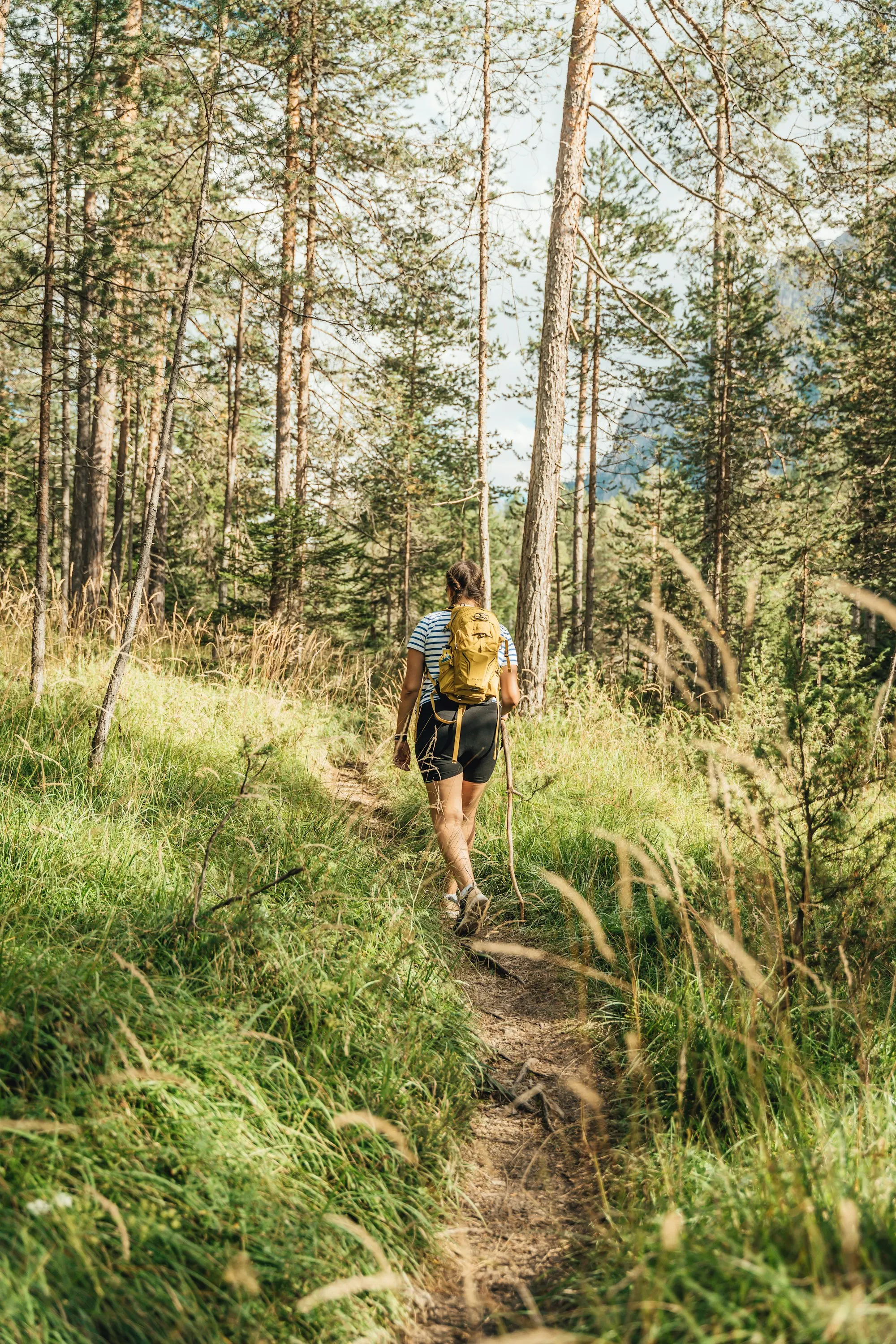
Trekking is mostly legs and core: squats, step-ups onto a bench, lunges, calf raises and planks cover the climb and the knee-heavy descent. Do two sessions a week of 20 to 30 minutes, matching the NHS and WHO minimum. Add a daypack with a few litres of water in weeks 4 to 7 so your shoulders and back get used to carrying. Break in your shoes during those walks; our shoes and poles guide covers fit.
What fitness does not do
Fitness makes the walking easier. It does not make you immune to altitude. The CDC's Yellow Book guidance on altitude illness is built around ascent rate: above 3,000 m, increase your sleeping altitude by no more than about 500 m a day and add a rest day for every 1,000 m gained. Read our altitude gain guide and altitude sickness guide, and choose a trek with a gentle profile for your first; our easy treks list is a good start.
Rehearse the trip, not only the fitness
The last three weeks are about practice. Wear the shoes and socks you will trek in on your weekend walks, so you find hot spots before the trail does. Carry the same daypack, and eat and drink the way you will on the trek. The NHS altitude page advises drinking enough water to avoid dehydration and not drinking alcohol while travelling or climbing, so build both habits now. If your trek starts before dawn, as Kedarkantha's summit day does at about 4 a.m., do one early-morning walk with a head torch.
Check your kit list against our packing list at the same time, and rent or buy the heavy items early enough to test them.
Many people stick to a plan better with company: a friend, an office team or a college group. Treqz Run and Crew, for run clubs, offices and colleges, are coming soon, and you can read about Crew now. For a first running habit, our 5K plan pairs well with this walking plan.
When to see a doctor
Operators ask for a medical certificate on many treks; Himalayan Dream Treks lists one for Dayara Bugyal. The CDC says travellers with conditions such as coronary artery disease, chronic lung disease, sleep apnoea, or poorly controlled asthma should speak to a doctor who knows high-altitude medicine before going, even if the condition is well controlled. Pregnant travellers should confirm a low-risk pregnancy and avoid sleeping above about 3,050 m. Start any new exercise programme slowly, and talk to a doctor first if you have a health condition, are older, or have not exercised for a long time.
This is general fitness information, not medical advice or a personal training plan. Treqz is a free atlas and does not run treks.
Sources
- WHO: Physical activity
- NHS: Physical activity guidelines for adults aged 19 to 64
- NHS: Altitude sickness
- CDC Yellow Book: High-altitude travel and altitude illness
- Himalayan Dream Treks: Dayara Bugyal
- Bikat Adventures: Kedarkantha
Quick questions
How long should I train for a Himalayan trek?
Eight weeks is a sensible minimum for a beginner who already walks a little. If you are starting from a very low base, give yourself 10 to 12 weeks and talk to a doctor first.
How much exercise do adults need per week?
WHO recommends about 2.5 hours (150 minutes) of moderate aerobic activity a week, or about 75 minutes of vigorous activity, plus muscle-strengthening on at least two days. The NHS gives the same minimums.
Do I need to run to prepare for a trek?
No. Brisk walking, stairs and hill walking are the closest practice for most beginner treks. Running helps your stamina; our 5K plan is one gentle way to start.
Will being fit stop altitude sickness?
Do not rely on it. The CDC's guidance is based on how quickly you gain sleeping altitude, not on fitness. Above 3,000 m it suggests no more than about 500 m a day.