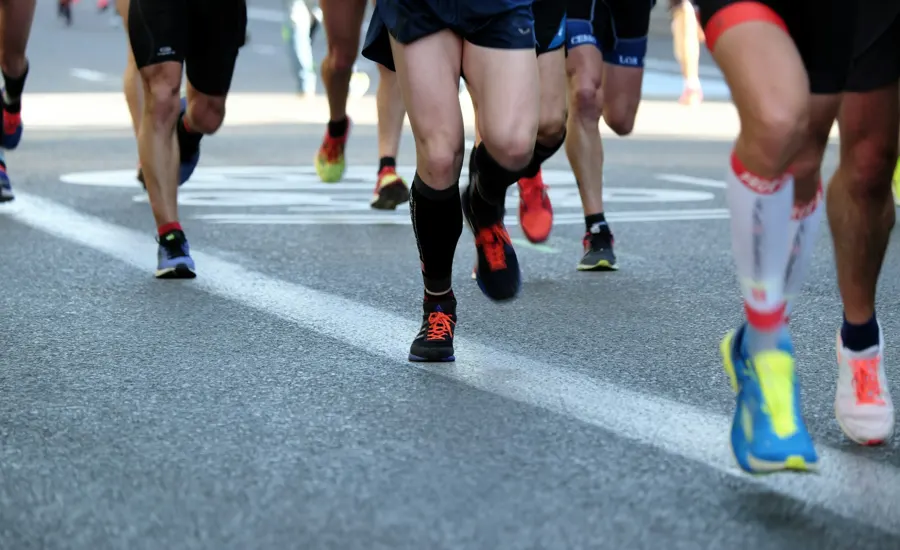
- Most beginner running injuries come from doing too much, too soon, on hard ground or in shoes that do not suit you.
- Rest and easier cross-training, such as swimming, are the usual first steps, then build back slowly.
- See a doctor if pain is severe, getting worse, does not improve after a couple of weeks, or comes with swelling, numbness, locking or fever.
Most beginner running injuries are overuse problems: the body is asked for more than it has adapted to. Below are five common ones, what sources say about each, and when it is time to stop or see a doctor. This is general information, not a diagnosis.
The big cause: too much, too soon
NHS lists starting exercise after a period of inactivity, running or jumping on hard surfaces and poor technique among the causes of shin splints, and OrthoInfo says runner's knee can follow a sudden increase in how often, how long or how hard you train, or a change of shoes or surface. In plain terms, add distance slowly. Our 5K plan and couch to 10K plan are built around gradual steps with rest days.
Shin splints
NHS describes pain and tenderness along the front of the lower leg during exercise, calls it not serious, and says it usually improves within a few weeks. Its advice: stop the exercise that caused it, switch to gentle activity such as swimming or yoga, use a wrapped ice pack for up to 20 minutes every 2 to 3 hours, and restart slowly. Warming up, supportive shoes and softer ground are suggested to lower the risk. See a doctor if it gets worse or does not improve; NHS says contact NHS 111 if the pain is severe or you have injured your shin.
Runner's knee
OrthoInfo (the American Academy of Orthopaedic Surgeons' patient site) explains that patellofemoral pain, often called runner's knee, is a dull ache at the front of the knee around the kneecap. It is worse with stairs, running, jumping, squatting or sitting for long with knees bent, and you may feel popping or crackling. Causes include overuse, poor training technique or equipment, and weak thigh and hip muscles. It suggests stopping painful activities until it settles, switching to cycling or swimming, and exercises that strengthen the quadriceps, hips and core. It says to contact a doctor if pain persists or the knee becomes harder to move.

Plantar fasciitis
NHS describes pain under the foot near the heel and arch, usually worst with the first steps after resting and easing as you move. Risk factors include starting exercise on hard surfaces, tight calves, poorly cushioned shoes and a sudden increase in standing or walking. Self-care includes resting, wrapped ice, cushioned supportive shoes, and gentle stretches for the sole and heel. See a doctor if there is no improvement after 2 weeks, if pain is severe, or if you have tingling or loss of feeling in the foot. People with diabetes should get foot pain checked.
IT band pain
Sources describe iliotibial band syndrome as pain on the outer side of the knee, sometimes at the hip, that is typically worse during running. Rothman Orthopaedics says it is mainly an overuse injury in runners, with distance and downhill running and unsuitable footwear as contributors. Temple Health lists causes such as overuse, foot problems and weak thigh muscles. Treatment in both is to reduce or stop the aggravating activity, with physical therapy for strength and flexibility. Both recommend seeing a sports medicine or orthopaedic provider for diagnosis; Rothman says early care makes recovery easier.
Blisters
NHS says most blisters heal within a week. Keep them clean, cover them with a soft plaster or padded dressing, and do not pop them or peel the skin. To prevent them: wear well-fitting shoes, break new shoes in gradually, wear thick moisture-wicking socks, and change socks if your feet sweat. Get medical advice if a blister is very painful, keeps coming back or looks infected (hot, with green or yellow pus or red skin). Wet socks matter in the monsoon; see running in Indian heat and monsoon.
When to rest and when to see a doctor
- Rest or switch to easier cross-training when pain starts during a run and returns. Sources above repeatedly suggest swimming, cycling or yoga while you recover.
- Do not push through sharp or worsening pain. NHS advice on sprains and strains lists very severe or worsening pain, large swelling or bruising, not being able to put weight on the limb or not improving after self-care as reasons to get help.
- Get urgent medical help if you heard a crack at the time of injury, the limb looks misshapen, the area is numb or tingling, the skin is blue or grey and cold, the knee locks or gives way, or there is fever with a hot red knee, according to NHS pages on sprains and knee pain.
- Do not self-diagnose. NHS's knee pain page warns that many different problems cause knee pain and says to see a doctor if you are unsure.
Prevention checklist
- Increase distance and pace gradually, with rest days.
- Choose shoes that fit and support your feet, and break them in. See running shoes for Indian roads.
- Prefer softer surfaces now and then, if you have them.
- Warm up before and stretch gently after.
- Mix in cross-training such as swimming, cycling or yoga.
Running with others helps you spot bad habits; see how to join a run club. Treqz Run is coming soon and is not available yet.
This is general information, not medical advice. Ask a doctor or physiotherapist about pain that worries you.
Sources
- NHS: Shin splints
- NHS: Plantar fasciitis
- NHS: Blisters
- NHS: Sprains and strains
- NHS: Knee pain
- OrthoInfo: Patellofemoral pain syndrome
- Temple Health: Runner's knee and iliotibial band syndrome
- Rothman Orthopaedics: Iliotibial band syndrome
Quick questions
What is the most common injury for new runners?
Sources describe shin splints, runner's knee, plantar fasciitis, IT band pain and blisters as common overuse problems. All are linked in part to a sudden increase in activity, hard surfaces or poor footwear.
Should I run through shin splint pain?
NHS advises stopping the exercise that caused it, switching to gentle exercise such as swimming or yoga, and rebuilding slowly once you feel better.
How long should I rest a running injury?
It depends on the injury. NHS says plantar fasciitis should be seen by a doctor if it has not improved after 2 weeks, and shin splints usually improve within a few weeks. A doctor can advise you.
Can I pop a blister?
NHS says not to burst it yourself or peel the skin. Keep it clean and covered with a soft plaster or padded dressing.