
- Find clubs through Strava, Instagram, local parks, running stores and race-day contacts. Then go to one session before you commit.
- Ask about pace groups, route, start time, safety and whether it is free before your first run.
- Good clubs welcome beginners. If you are made to feel slow, try another one.
The easiest way to join a run club is to find a few near you, turn up to one session as a guest, and see how it feels. Ask a few simple questions first so that you know the pace, place, time and cost.
Why join a run club?
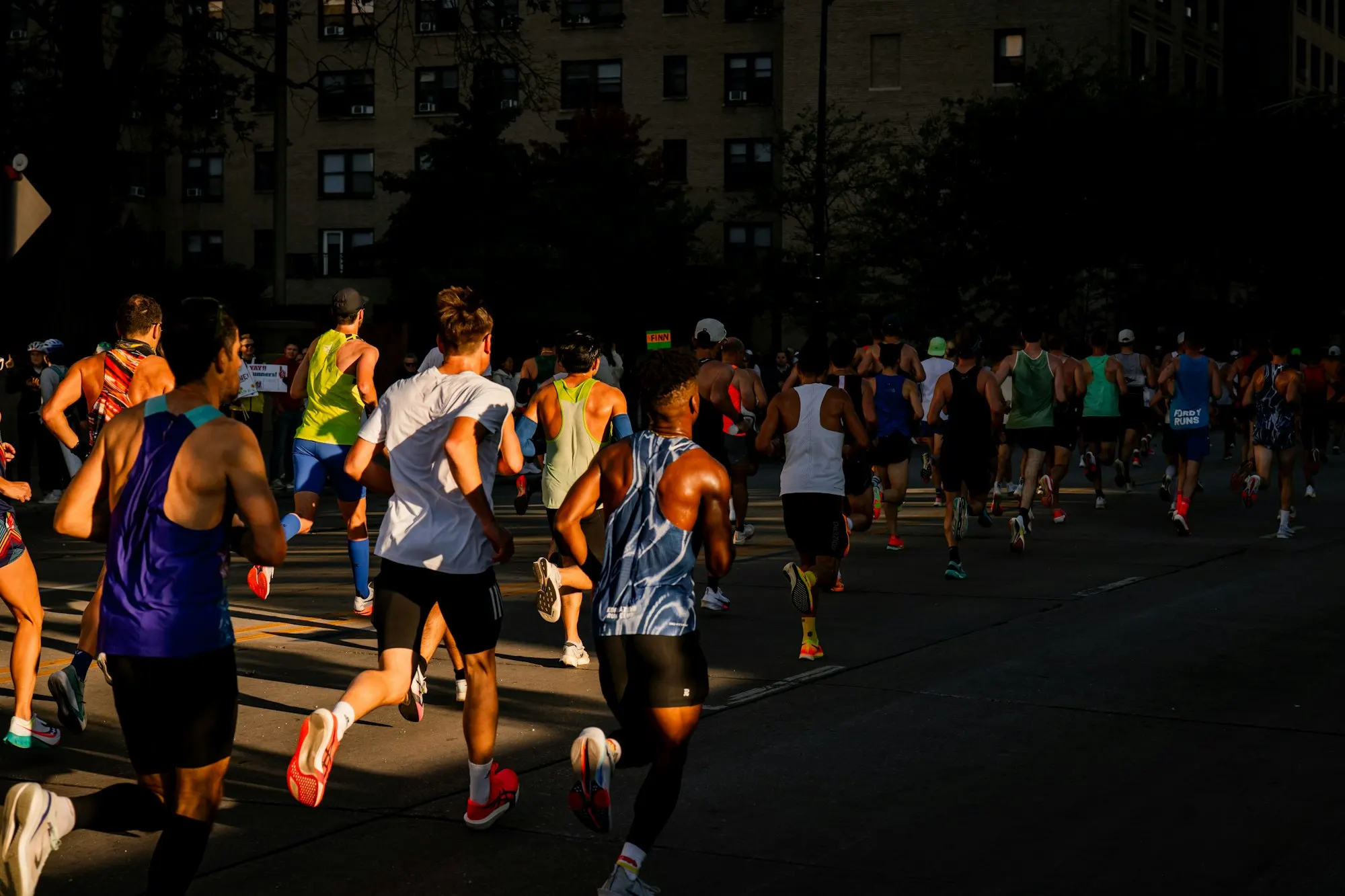
Running alone works, but a group gives you a reason to get out of bed, people to run at your pace, and safer company in the early morning or evening. The World Health Organization recommends at least 150 minutes of moderate activity a week for adults and links regular activity to better sleep and mental health; a fixed weekly session with other people is one of the easiest ways to keep it up. If you are new, our 5K plan for beginners prepares you for a first club run.
How to find clubs near you
- Strava clubs. On Strava you can search clubs by name, location, sport and club type. Public clubs let anyone join; invite-only clubs approve requests, and non-members cannot see their recent activities or private events. Request to join and read the description.
- Instagram. Search for your city plus "run club" or "running", and check tagged posts. Look at how recently the club posted and whether the photos show people of different speeds.
- Local parks. If you see a group stretching at the same park gate at the same time every week, ask them. Most are glad to talk.
- Running stores. Shops that sell running shoes often know the local groups, or host one themselves.
- Race-day contacts. At any 5K or 10K, talk to other runners, and check the bibs and T-shirts of groups around you. Many people join a club after a race.
- Treqz. See our run clubs page. Treqz Crew (for run clubs, offices and colleges) is coming soon.
We have not listed named clubs here because they change often. Check the club's own page, not a third-party list, for the current day, time and meeting point.
What to look for
- Pace groups. A good club has more than one pace group, or a walk-run option. A no-drop rule, where nobody is left behind, is a good sign for beginners.
- A clear meeting point and time. Fixed, easy-to-reach and in a safe public place.
- Leaders who are visible. You should know who to talk to when you arrive.
- A friendly atmosphere. Beginners should be welcome, not tolerated.
- Sensible attitudes to injury and weather. A good leader tells you to skip a run when you are hurt or when it is too hot, not to push on.

Questions to ask before your first run
- What distance and pace do you run, and can a beginner keep up?
- Is there a slower group, or a walk-run option?
- Where do we meet, how long does it take, and where does it finish?
- Is it free? If it is paid, what does the fee cover (coaching, kit, events, insurance)?
- Is the route on roads, in a park or on a track, and is it lit?
- Who is in charge if someone is hurt or unwell, and is someone carrying water or a first-aid kit?
- Can I come once as a guest first?
What to expect at your first run
Arrive ten minutes early and introduce yourself to a leader. Say that you are new and tell them your usual distance and any health issue or injury. Most clubs start with a short warm-up and a quick briefing about the route and pace groups. Run in the group that feels comfortable, even if it is the slowest one. You should be able to talk during the run; if you cannot, slow down or walk, as the NHS Couch to 5K programme encourages beginners to do at their own pace. Afterwards, many groups stay on for tea or breakfast. That is often where friendships start, so stay if you can.
Give it three or four sessions before you decide. The first run is usually the most awkward, and the second is easier.
Free clubs and paid clubs
Many clubs are free and run by volunteers. Others charge for structured coaching, race-day support, group kit or events. Neither is automatically better. Ask what you get for the money, whether you can pay per session or month, and how to leave. Never pay a large amount before you have run with the group at least once. Be careful with anyone who asks for payment through unfamiliar links or who guarantees race results.
Safety and etiquette
- Tell someone where you are going, and arrive a few minutes early.
- Take your phone, ID and water. In summer, see running in Indian heat and monsoon. The NHS lists heavy sweating, dizziness and nausea as signs of heat exhaustion and says heatstroke, with confusion or hot skin that is not sweating, is an emergency.
- Be careful with your location. Research from the University of Illinois found that Strava's privacy zones did not reliably hide home locations. Make your profile private or set a zone if you share runs, and avoid posting your start from home.
- Follow the road rules. Run in single file on roads, keep to the side, and watch for traffic. Do not cross at red lights.
- Be kind. Do not leave a slower runner behind, say hello to new people, and thank the volunteers.
- Listen to your body. If you have chest pain or feel dizzy, stop and ask for help.
If it is not the right club
If a club feels too fast, too serious or unfriendly, try another one. Cities usually have several. And if you want to start your own, our guide to how to start a run club in India explains how.
General information, not medical advice. If you have a health condition, talk to a doctor before starting.
Sources
- Strava Support: Clubs
- University of Illinois Grainger Engineering: research on fitness app privacy zones
- WHO: Physical activity fact sheet
- NHS: Heat exhaustion and heatstroke
- NHS: Get running with Couch to 5K
Quick questions
How do I find a run club near me?
Search Strava's clubs by name or location, look at Instagram tags for your city, ask at a local running store, or talk to people at a park or race. Then visit one session.
Do I need to be fast to join a run club?
No. Most clubs have more than one pace group, and many beginners join to learn. Ask whether there is a walk-run or no-drop group.
Are run clubs free in India?
Many are free and run by volunteers, while some charge for coaching, kit or events. Ask what the fee covers before you pay anything.
Is it safe to run with strangers?
Usually yes in a group, but be sensible: meet in a public place, tell someone where you are going, and check how the club handles safety and emergencies.