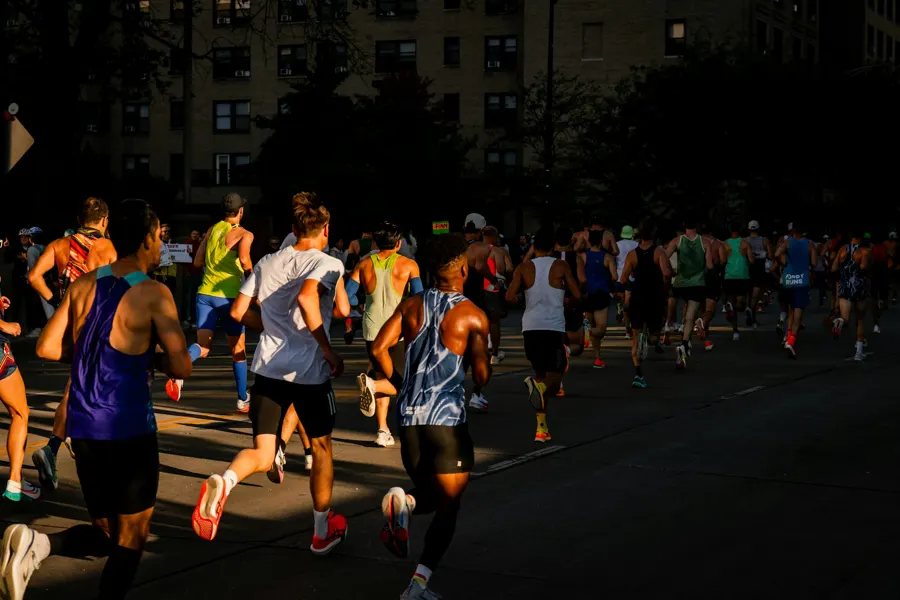
- Start small: one fixed day, time and meeting point, one safe route, and two pace groups.
- Check with the park authority, residents' association or local police about permissions, and get advice on insurance and waivers.
- Use a Strava club and a group chat to stay in touch. Treqz Crew, for clubs and teams, is coming soon.
You can start a run club with a handful of friends, one fixed time and one safe route. The rest is a checklist: safety, permissions, pace groups, communication and a plan for growing without losing the friendly feel.
1. Decide what the club is for
Write one sentence: who it is for and what it does. "A free Sunday morning run for beginners in our neighbourhood" is a good start. A clear purpose tells people what to expect and helps you say no to things that do not fit. If your club is for an office, a college or a housing society, say so; the same checklist works. Treqz Crew is being built for these kinds of groups and is coming soon, but you do not need it to begin.

2. Pick a day, a time and a meeting point
- One fixed slot. Weekly, same day, same time. Early morning in summer, evening in winter, or whatever suits your city's heat. See running in Indian heat and monsoon.
- An easy meeting point. Close to public transport and parking, with shade, water and a toilet nearby.
- A short start. Begin and end with a warm-up and a gentle cool-down together.
3. Choose a safe route
- Prefer parks, tracks or wide roads with footpaths, and avoid heavy traffic.
- Run the route yourself first, at the same time of day. Note lighting, dogs, uneven ground, open drains and crossings.
- Have a loop that can be shortened or lengthened, so that every pace group can finish together.
- Have a plan B for rain or poor air; see running and air quality in India.

4. Check permissions
Who owns the place you run decides the rules. A public park may be run by a municipal body or a development authority, a stadium by a sports body, a campus by the institution, and a housing-society path by its residents' association. Rules on groups, events, speakers, banners and charging fees differ everywhere, and we cannot cover them all. The safe approach is to ask the owner first, in writing if possible, and to keep the answer. Ask the local police station before you plan anything on public roads, and especially before any event that closes or crosses a road. If you collect money or put up banners, ask what is allowed.
5. Plan for safety
- Two leaders. One at the front, one at the back (a sweeper) so nobody is left behind.
- Water and first aid. Carry water and a basic first-aid kit, and know the nearest hospital.
- Heat. The NHS lists heavy sweating, dizziness, headache and nausea as signs of heat exhaustion, and says confusion, hot skin that is not sweating, or loss of consciousness are signs of heatstroke, which is an emergency. Teach your leaders to recognise these, to cool a runner down and to call for help.
- Health. Ask new runners to tell you about any health condition. The NHS advises talking to a doctor before starting a new exercise programme if you are worried about your health.
- Emergency contacts. Keep a list of members' emergency contacts, held privately, and a phone with charge.
6. Make pace groups
Pace groups are how a club stays friendly. A simple set is a walk-run group (the run/walk method is the basis of the NHS Couch to 5K programme), an easy group and a faster group. Give each group a leader and a clear distance. Make it a rule that nobody runs alone and nobody is left behind. New runners can use our 5K plan between club runs.
7. Insurance and waivers
This is general information, not legal advice. Running with others carries risk, and the legal setup depends on who organises, who owns the place and whether money changes hands. Talk to a lawyer or an insurance adviser about whether you need insurance, a simple participation waiver or consent form, and what the park or venue requires. Do not copy a waiver from another country or club without advice. Be clear with members that running is at their own risk and that they should run within their own limits.
8. Set up communication
- A group chat for last-minute changes, with one admin posting the weekly plan.
- A Strava club. In Strava you can create a club (you become the owner) and make it public, which lets anyone join, or invite-only, where the owners and administrators approve members and non-members cannot see recent activities.
- A short weekly message: the day, time, meeting point, route, distance and pace groups.
- Privacy. Do not post members' home locations or photos of children without permission. Research from the University of Illinois found that Strava's start and end privacy zones did not reliably hide home locations, so encourage members to use private profiles.
9. Grow slowly
- Welcome new runners by name, and pair them with a friendly member.
- Add a monthly social, a charity or a race day outing.
- Share the load: let members lead warm-ups, route checks and photos.
- Look at ideas in run club event ideas, and, once you are established, brands sponsoring a run club.
List your club on our run clubs page once Treqz Crew and Run are available. We will say clearly when they are. Meanwhile, if you are looking for a club instead, see how to join a run club.
General information, not legal, insurance or medical advice.
Sources
- Strava Support: Clubs
- NHS: Heat exhaustion and heatstroke
- NHS: Get running with Couch to 5K
- University of Illinois Grainger Engineering: research on fitness app privacy zones
Quick questions
Do I need permission to start a run club in India?
Rules vary by city and by place. Parks, stadiums and roads each have different owners and rules, so ask the park authority, the stadium, the residents' association or local police before you advertise a regular event. We cannot give a single national rule.
How many people do I need to start?
Two or three is enough. Many clubs begin with friends and grow by word of mouth.
Do I need insurance for a run club?
That depends on your setup and on who owns the place you run. Ask an insurance adviser or a lawyer; this post is general information only.
How do I make beginners feel welcome?
Offer a walk-run or slow group, never leave anyone behind, and greet new runners by name. See our guide for joining a club for the other side of the story.